Spring Cross Stitch: Artisanal Needlework SVG Font
There is a specific kind of warmth that comes from handmade textiles—a tactile quality that digital screens often struggle to replicate. Spring Cross Stitch bridges that gap, offering a premium font experience that mimics the intricate "X" pattern of traditional embroidery. This is not merely a typeface; it is a digital artifact designed to evoke the cozy, nostalgic atmosphere of a sunlit craft room. For designers and creatives, this SVG font provides an immediate injection of character, transforming standard text into tactile visual storytelling.
The Visual Character of Embroidery
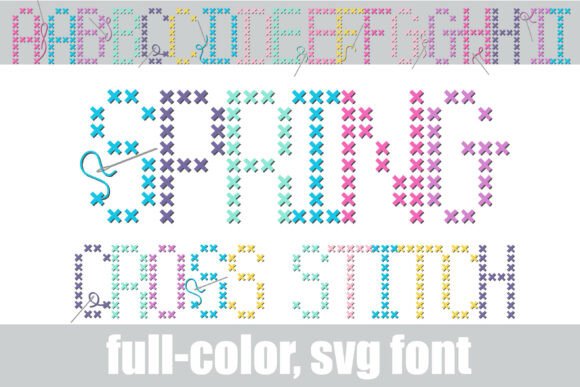
At its core, Spring Cross Stitch is a celebration of color and texture. The defining feature is the visible stitch structure, where every curve and line is constructed from individual, pixel-perfect "X" shapes. This creates a dense, textured look that stands out against flat, clean backgrounds. The color palette is carefully curated to reflect the vibrancy of the season: soft turquoise, gentle lavender, warm pink, and sunny yellow. These hues are not flat fills; they contain the subtle variations found in actual thread, adding depth and realism to the design.
What sets this creative font apart is the inclusion of artisanal details. Several characters feature integrated needles and trailing threads. This design choice creates a dynamic sense of movement, suggesting that the text is being stitched in real-time. It breaks the static nature of digital typography, adding a playful, "work-in-progress" aesthetic that appeals to hobbyists and crafters. While it functions as a display font, its personality is deeply rooted in the history of needlework, making it an authentic choice for projects requiring a touch of heritage.
Strategic Applications for Branding and Marketing
Understanding where to deploy a display font like Spring Cross Stitch is key to effective visual hierarchy. Because of its intricate texture and color, this typeface is best used for headlines, logos, and focal points rather than long-form body copy. It excels in environments where a handcrafted identity is paramount.
- Logo Design and Brand Identity: For a boutique craft store, a quilting supply shop, or a local knitting club, this font creates an instant connection with the target audience. It signals that the brand values tradition, quality, and handmade goods.
- Packaging Design: Imagine this font on a label for artisanal honey, homemade jam, or organic tea. The SVG texture mimics a fabric label, reinforcing the product's artisanal quality.
- Editorial and Publishing: In editorial design, particularly for lifestyle magazines or DIY blog headers, Spring Cross Stitch can be used for pull quotes or section titles. It provides a visual break from standard serif or sans serif fonts, guiding the reader's eye effectively.
- Social Media Graphics: On platforms like Instagram or Pinterest, visual distinctiveness is currency. This font ensures that graphics stand out in a crowded feed, particularly for accounts focused on DIY crafts, home decor, or slow living.
Influence on Brand Perception and Engagement
Typography speaks volumes before a single word is read. By utilizing Spring Cross Stitch, you are curating a specific brand perception. The font communicates patience, care, and attention to detail—values that are highly prized in the handmade economy. It shifts the tone from corporate and sterile to personal and approachable.
In terms of audience engagement, this typeface triggers nostalgia. For adults aged 20–50, cross-stitch often evokes memories of family heirlooms or childhood projects. This emotional resonance can increase the time a user spends looking at a design, improving recall and connection. However, readability must be balanced with style. The intricate nature of the SVG pattern means it performs best at larger sizes. Using it for small, secondary text could compromise legibility; therefore, pairing it with a clean, geometric sans serif font is recommended for body text to maintain a professional layout.
Practical Guide to Implementation
Integrating a specialized SVG font into your workflow requires a slightly different approach than standard vector typefaces. Here is how to make the most of Spring Cross Stitch:
- Technical Compatibility: Ensure your design software supports color fonts or SVG formats. Modern versions of Photoshop, Illustrator, and InDesign handle these well. If the SVG version isn't supported, the font often includes a standard vector fallback, though it will lack the color and texture.
- Font Pairing: This font has a strong personality. To avoid visual clutter, pair it with a neutral companion. A simple serif font works well for a vintage, cozy feel, while a clean sans serif creates a more modern, "craft-chic" contrast. Avoid pairing it with other script or handwritten fonts, as they will compete for attention.
- Color Coordination: While the font has built-in colors, consider the background. It pairs beautifully with natural textures like linen, wood grain, or kraft paper. Solid, muted pastels also allow the vibrant thread colors to pop without overwhelming the viewer.
- Licensing and Usage: Always verify the commercial font license. Most premium assets allow for use in physical products (like t-shirts or mugs) and digital ads, but it is vital to check the terms regarding server embedding for web applications.
Ultimately, Spring Cross Stitch is more than just a set of characters; it is a design asset that brings the heart of the maker movement into the digital realm. By applying it thoughtfully, you can enhance your visual storytelling and build a brand identity that feels genuinely warm and inviting.